
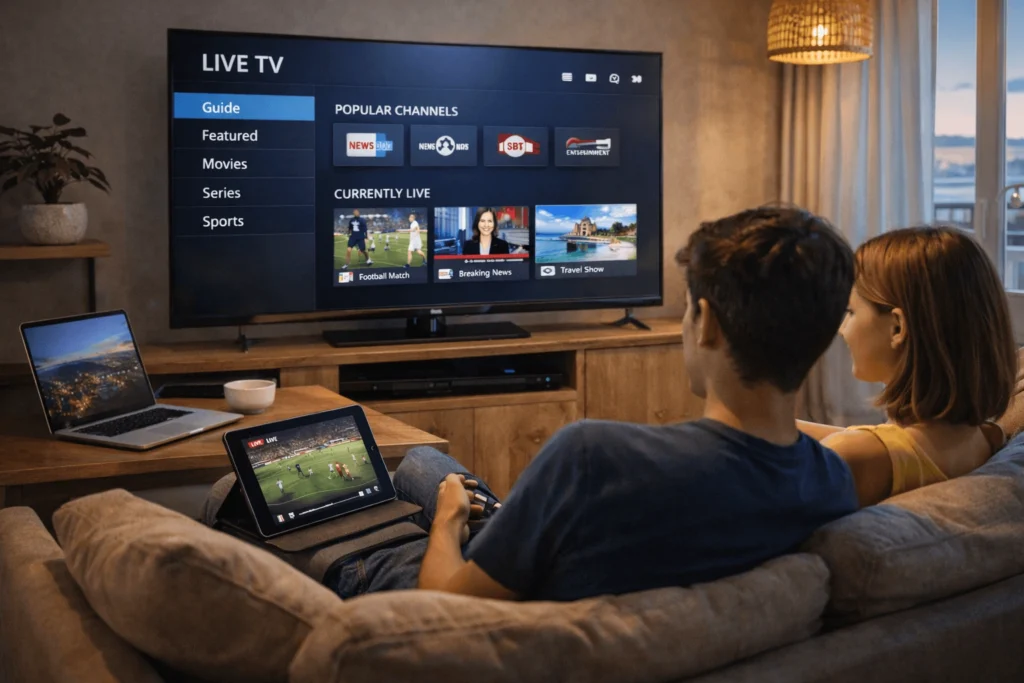
Cyprus has a sizeable and growing population of university students, young professionals, and expatriate residents living in small city apartments — particularly in Nicosia, Limassol, Larnaca, and Paphos. For many of these residents, traditional cable television subscriptions are neither practical nor cost-effective. A single-room apartment or a shared student flat does not need a multi-receiver satellite package. What it needs is flexible, affordable access to a broad range of content on whatever screen is available. That is precisely why IPTV Cyprus apartments have become an increasingly common topic of discussion among students and flat-sharers looking for a convenient streaming solution.
Understanding how IPTV works in shared living situations — including what shared accounts actually involve, how simultaneous streams function, and what fair use means in practice — helps residents make informed decisions rather than discovering the limitations of their setup after the fact.
The practical appeal of IPTV for small apartments is straightforward. There is no physical installation required, no satellite dish to mount on a rental property, and no long-term contract tied to a fixed address — features that matter enormously when accommodation changes at the end of an academic year or a rental period. Content is delivered over the internet, which means the same subscription can follow a user from one flat to another as long as the account credentials and connection requirements are met.
For shared student flats with several occupants, IPTV also offers a degree of flexibility that traditional broadcast television cannot. Different residents can watch different content on different devices at the same time, provided the subscription and the internet connection can support it. An iptv cy setup in a three-person flat is fundamentally different from the same service in a single-occupancy studio, and understanding those differences is important from the outset.
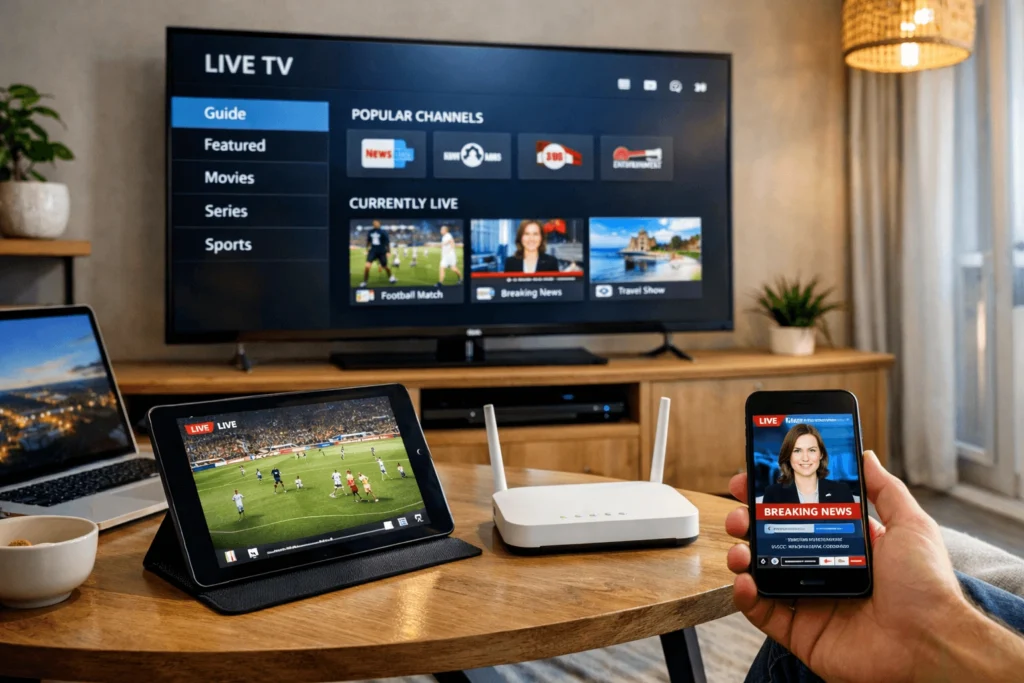
A shared IPTV account refers to a single subscription being used across multiple devices, typically within the same household. From a technical standpoint, the subscription is registered under one set of credentials — a username and password — which are then entered into the IPTV application on each device. Every device that uses those credentials is considered an active connection to the same account.
The number of devices that can connect simultaneously is set by the subscription plan. This is the concurrent connection limit, and it is one of the most important specifications to verify before committing to a plan intended for shared use. A standard single-connection plan will allow only one device to stream at any given moment, regardless of how many devices have the credentials installed. Attempting to start a second stream will either fail outright or interrupt the first session.
For IPTV Cyprus apartments with two or three occupants each expecting independent access, a plan that explicitly supports multiple simultaneous connections is necessary. Some providers offer tiered plans with two, three, or more concurrent streams, while others do not differentiate clearly in their descriptions. Residents sharing a flat should clarify this detail directly before subscribing.
Fair use in the context of IPTV subscription services generally refers to the expectation that a subscription is used within a single household, by the people living at that address, for personal non-commercial viewing. Most IPTV providers apply this principle whether they state it explicitly or not.
What falls outside fair use is sharing account credentials beyond the household — for example, distributing a login to people in different apartments or cities. This type of extended sharing places disproportionate load on the provider’s servers, degrades service quality for all users, and typically violates the terms under which the subscription was issued. Providers monitor unusual connection patterns, including logins from geographically dispersed IP addresses, and may suspend accounts that show signs of broad credential distribution.
Within a single apartment or flat, using one iptv subscription Cyprus residents share among household members is a different matter and is the normal basis on which multi-connection plans are sold.
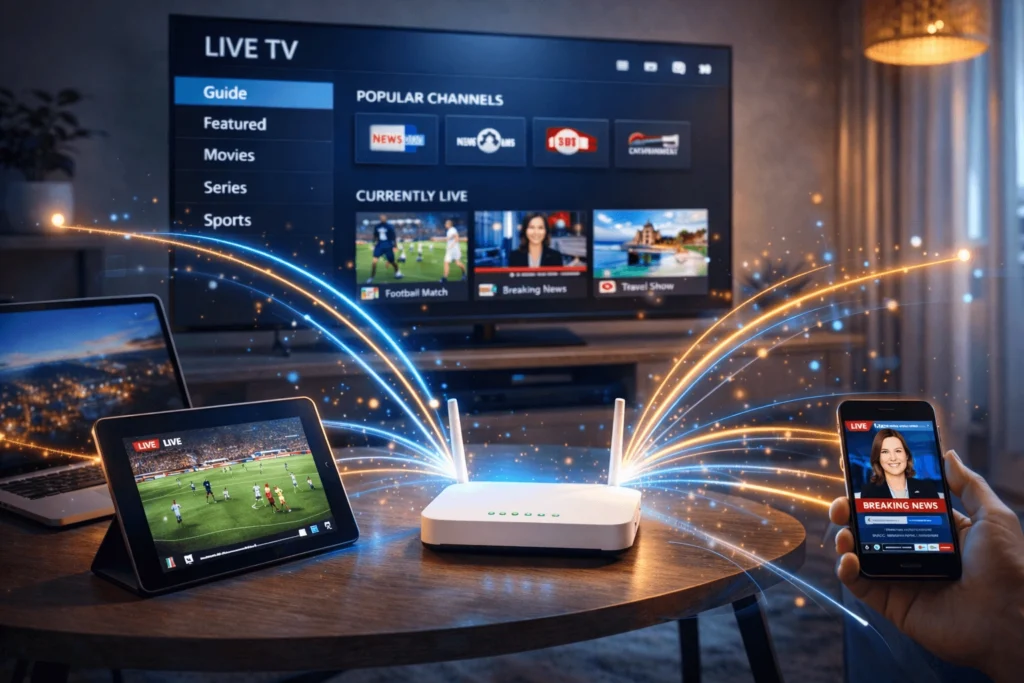
Bandwidth is a recurring challenge in shared living situations. Each active IPTV stream consumes a portion of the available internet connection, and in flats where multiple occupants also use the connection for video calls, gaming, or file downloads, the competition for bandwidth can be significant.
As a working baseline, each HD stream requires a stable 8 to 10 Mbps of sustained download speed. Two simultaneous HD streams therefore need at least 20 Mbps available for IPTV alone, with additional capacity reserved for other internet activity. In Cyprus, internet plans from providers such as Cyta, Cablenet, and PrimeTel offer a range of broadband options, and many student-area apartments in Nicosia and Limassol are served by plans capable of 50 Mbps or more. However, the connection provided with a rental apartment may not always match what is theoretically available in the building, and residents should check actual speeds using a speed test tool rather than relying on advertised maximums.
Wi-Fi signal quality within the apartment is a separate but related issue. A router placed near the entrance of a flat may deliver a strong signal in the hallway and living room while providing a noticeably weaker connection in a rear bedroom. IPTV streams, particularly live channels, are sensitive to signal instability. Buffering and sudden resolution drops during live sports or news are often the result of an inconsistent Wi-Fi connection rather than a problem with the subscription itself. Wherever possible, connecting an iptv box Cyprus residents use in fixed locations — such as a smart TV or Android TV box in the living room — via an Ethernet cable to the router eliminates this variable entirely.
The device landscape in student flats and small apartments tends to be varied and budget-conscious. Laptops, smartphones, and tablets are standard equipment for most students, and all can be used to stream IPTV through compatible applications. For living room or shared-space viewing, a smart TV with a built-in IPTV application or an Android TV box connected to a standard display is the most practical approach.
IPTV Smarters Pro is among the most commonly recommended applications for both smart TVs and Android devices in Cyprus. It supports multiple playlist formats, allows straightforward channel navigation, and works consistently across a range of hardware. For students setting up IPTV for the first time on a shared device, IPTV Smarters Pro offers a relatively simple configuration process compared to some alternatives.
Each device running the application simultaneously will count as one active connection against the subscription limit, so it is worth establishing clear informal agreements within a shared flat about when and how IPTV connections are used, particularly if the plan only supports two concurrent streams.
A few practical steps can significantly improve the reliability of IPTV in shared Cyprus apartments. Connecting fixed devices by Ethernet rather than Wi-Fi is the most impactful single change available. Restarting the router periodically — ideally once a week — clears cached network states that can accumulate and reduce performance. Closing IPTV sessions on devices that are no longer in use prevents connection slots from remaining occupied unnecessarily, which is especially relevant under plans with a low concurrent stream limit.
For households experiencing persistent buffering, it is worth investigating whether the issue lies with the internet connection, the Wi-Fi signal, or the subscription itself before drawing conclusions. Resources from the Office of the Commissioner of Electronic Communications and Postal Regulations at ocecpr.org.cy include consumer guidance on broadband quality that may be useful for residents assessing whether their ISP is delivering contracted speeds.
IPTV Cyprus apartments setups work well when the fundamentals are in place: a subscription plan with sufficient concurrent connections for the number of occupants, an internet connection that can sustain multiple simultaneous streams, and a home network configured to deliver that bandwidth reliably to every device in the flat. For students and shared-flat residents in Cyprus who want to understand available options and device compatibility, the service information at iptvcyprus4k.com provides a useful starting point for exploring what plans can realistically support in a shared living context.
Reliable IPTV service in Cyprus. Enjoy live TV, movies, and series with high-quality streaming, premium channels, and fast customer support.
© 2026 IPTV Cyprus. All rights reserved.
WhatsApp us